- February 12, 2026

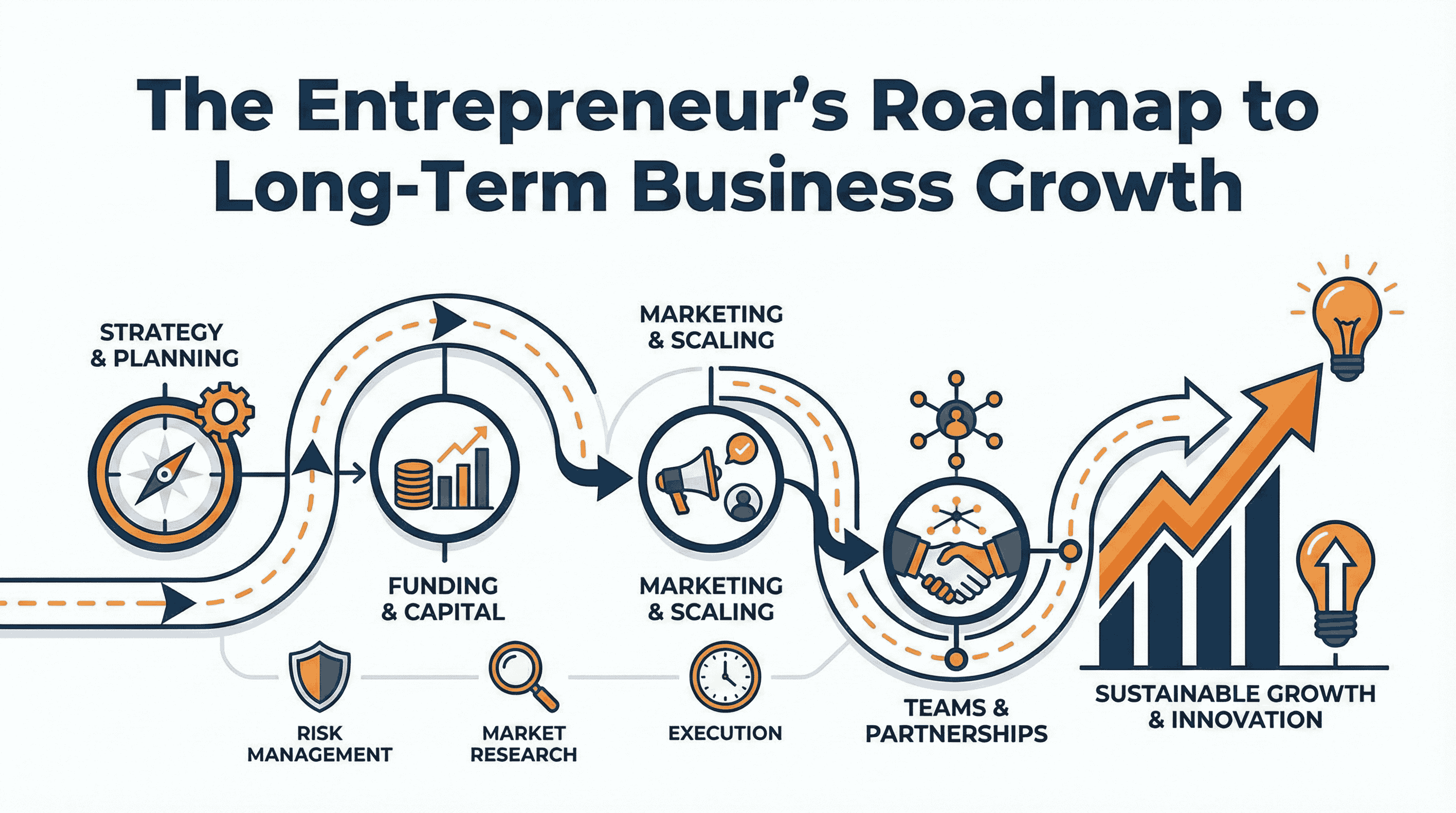
Every successful business began with a dream, but dreams alone don't build empires. What separates thriving enterprises from those that fade into obscurity is a strategic roadmap—a comprehensive plan that guides entrepreneurs through the inevitable challenges and opportunities that define the business journey.
The entrepreneurial landscape has never been more dynamic or competitive. With countless startups launching daily and established businesses constantly evolving, achieving long-term business growth requires more than just a great product or service. It demands intentional planning, the right financial resources, and a support network that can help you navigate uncharted territory.
Whether you're launching your first venture or scaling an existing operation, this roadmap will guide you through the essential elements of sustainable success. From business plan writing to securing startup funding, from finding invaluable mentors to attracting investors and grants—each component plays a vital role in your entrepreneurial journey.
Let's explore how you can build a foundation that not only supports your current ambitions but also creates the infrastructure for lasting prosperity.
A business plan is far more than a document you create to satisfy potential investors or lenders. It's your strategic compass—a living blueprint that articulates where you're going, how you'll get there, and what resources you'll need along the way.
A truly effective business plan addresses several critical areas that collectively paint a complete picture of your venture's potential:
● Executive Summary: A compelling overview that captures your business essence, unique value proposition, and growth trajectory in a way that makes readers want to learn more.
● Market Analysis: Deep insights into your target market, including size, demographics, trends, and competitive landscape. This demonstrates you understand the arena you're entering.
● Product or Service Description: A clear explanation of what you offer and, more importantly, the problem it solves for your customers.
● Marketing and Sales Strategy: Your roadmap for reaching and converting customers, including pricing, distribution channels, and promotional tactics.
● Financial Projections: Realistic revenue forecasts, expense budgets, and cash flow projections that show viability and growth potential.
● Operations Plan: The nuts and bolts of how your business will function day-to-day, from production to customer service.
● Growth Strategy: Specific milestones and expansion plans that outline how you'll scale over time.
Even experienced entrepreneurs can fall into traps when crafting their business plans. Here are pitfalls to sidestep:
Overly optimistic projections are perhaps the most common mistake. While enthusiasm is valuable, investors and lenders can spot unrealistic numbers instantly. Base your forecasts on market research and comparable businesses, not wishful thinking.
Ignoring the competition suggests naivety about your market. Even if you believe your offering is unique, alternatives always exist. Acknowledge competitors and clearly articulate your differentiators.
Neglecting the "why" behind your business can make your plan feel hollow. Investors invest in people as much as ideas. Share your passion, your origin story, and why you're uniquely positioned to succeed.
Treating the plan as static undermines its purpose. Your business plan should evolve as you gain market insights, achieve milestones, or encounter unexpected challenges. Review and revise it quarterly at minimum.
Entrepreneurship can be isolating. The decisions you face are complex, the stakes are high, and the path forward isn't always clear. This is where mentors become invaluable—experienced guides who've navigated similar challenges and can help you avoid costly mistakes.
The right mentor can accelerate your learning curve dramatically. But finding that person requires intentional effort:
Look within your industry for individuals who've achieved what you're pursuing. Their specific experience will be directly applicable to your challenges. Industry associations, conferences, and LinkedIn can help identify potential mentors.
Consider complementary expertise. If you're a technical founder, a mentor with sales or marketing experience might fill crucial gaps. If you're a creative visionary, a mentor with operational excellence could help you build sustainable systems.
Seek alignment in values and style. A brilliant mentor whose communication style clashes with yours won't be effective. Look for someone whose approach resonates and whose values mirror your own.
Explore formal programs. Many accelerators, incubators, and business organizations offer structured mentorship programs that can connect you with vetted advisors.
Once you've established mentor relationships, maximize their value:
● Come prepared: Respect your mentor's time by arriving at meetings with specific questions and relevant context.
● Be coachable: Listen actively, even when advice challenges your assumptions. The most valuable insights often come from unexpected perspectives.
● Follow through: Implement suggestions and report back. Mentors invest more in mentees who take action.
● Reciprocate when possible: Even as a less experienced entrepreneur, you have insights to share. Make the relationship mutually beneficial.
While mentors offer guidance based on their experience, business coaching provides structured support focused specifically on your development and goals. Coaches help you clarify vision, overcome obstacles, and maintain accountability.
Business coaching represents a significant investment, but the right timing can yield transformative results:
During transitions—launching a new venture, scaling operations, or pivoting your model—coaching provides clarity when decisions feel overwhelming.
When you've plateaued and can't identify what's holding you back, an objective coach can spot blind spots and help you break through limitations.
To develop specific skills like leadership, communication, or strategic thinking that will serve you throughout your entrepreneurial journey.
For accountability. When you're accountable only to yourself, it's easy to let priorities slip. A coach creates structure that keeps you focused on what matters most.
Professional business coaching typically delivers impact across several dimensions:
● Leadership Development: Building the skills to inspire teams, make difficult decisions, and create culture.
● Strategic Clarity: Cutting through noise to identify the highest-leverage activities for growth.
● Time Management: Learning to prioritize ruthlessly and delegate effectively.
● Mindset Shifts: Overcoming limiting beliefs and developing the psychological resilience entrepreneurship demands.
● Work-Life Integration: Building a sustainable approach that prevents burnout while driving results.
For many entrepreneurs, investors represent the fuel that transforms modest operations into market leaders. But attracting investment requires preparation, persistence, and the ability to build genuine relationships.
Before approaching investors, ensure your house is in order:
Perfect your pitch deck. This 10-15 slide presentation should tell your story compellingly while covering the essentials: problem, solution, market size, business model, traction, team, and ask. Every slide should answer the question, "Why should I invest?"
Know your numbers cold. Investors will probe your financials—revenue, margins, customer acquisition costs, lifetime value, burn rate, runway. Stumbling over these basics signals lack of operational command.
Understand your valuation. Be prepared to justify your asking price with comparable transactions, growth metrics, and future projections. Unrealistic valuations kill deals before they start.
Anticipate objections. Every business has weaknesses. Acknowledging them proactively while explaining your mitigation strategies demonstrates maturity and builds trust.
The best investor relationships extend far beyond capital:
Seek strategic value. The right investors bring expertise, connections, and credibility that accelerate growth beyond what money alone could achieve.
Communicate consistently. Regular updates—both good news and challenges—build trust and keep investors engaged. Surprises, especially negative ones, erode confidence.
Leverage their networks. Investors often know potential customers, partners, and future funding sources. Don't be shy about asking for introductions.
Treat them as partners. While you maintain operational control, wise entrepreneurs recognize that investors' success is tied to their own. Collaboration beats conflict every time.
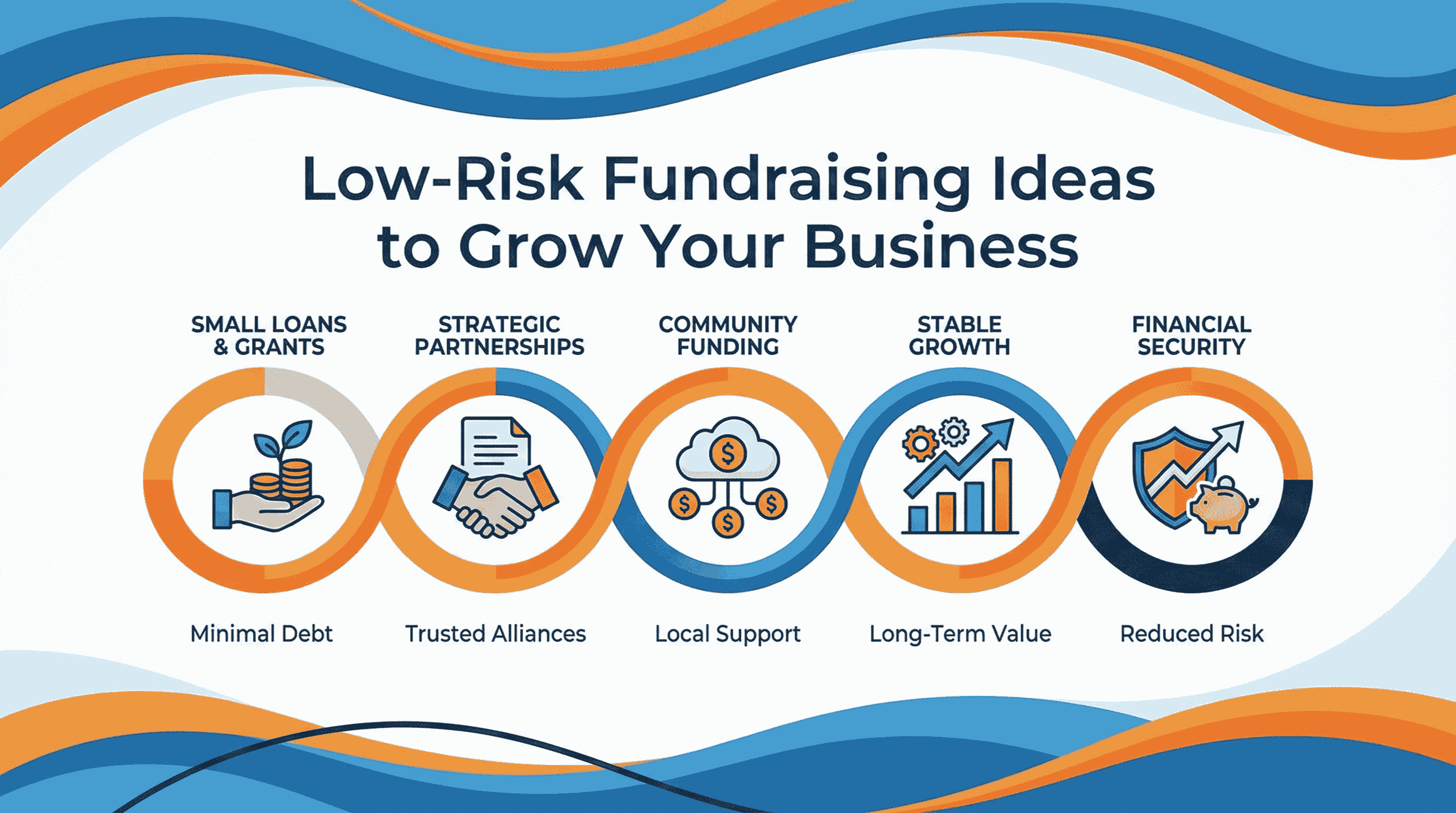
Grants represent one of the most attractive funding options—capital that doesn't require repayment or equity surrender. While competitive, grants can provide crucial resources for businesses that qualify.
Grant availability varies significantly by sector, location, and business characteristics:
Government grants from federal, state, and local agencies support specific objectives like job creation, innovation, or economic development. The Small Business Innovation Research (SBIR) program, for example, provides significant funding for technology companies.
Foundation grants often focus on social impact, supporting businesses that address specific causes or serve underrepresented communities.
Corporate grants from large companies sometimes support small businesses in their supply chains or communities.
Industry-specific grants target particular sectors like clean energy, healthcare, or agriculture where specialized funding exists.
Resources like Grants.gov, your local Small Business Development Center, and industry associations can help identify relevant opportunities.
Grant applications demand precision and persuasion:
● Follow instructions meticulously. Grant reviewers evaluate many applications; those that don't follow guidelines often receive automatic rejection.
● Align with the grant's mission. Clearly demonstrate how your business advances the funder's specific objectives.
● Be specific and measurable. Vague promises don't win grants. Quantify your expected outcomes and explain how you'll measure success.
● Tell a compelling story. While data matters, human connection drives decisions. Help reviewers understand why your work matters.
● Budget realistically. Inflated or unclear budgets raise red flags. Justify every expense and demonstrate fiscal responsibility.
● Start early. Quality applications take time. Rushing leads to errors and weak proposals.
Achieving initial success is exhilarating, but maintaining momentum requires different skills and strategies. Business growth isn't a destination—it's an ongoing journey that demands continuous evolution.
Growth often creates tension between expansion and excellence. Managing this balance requires intentional systems:
Document processes before scaling. What works when you're small becomes chaos at scale without standardization. Create playbooks, checklists, and training materials that ensure consistency.
Hire ahead of desperate need. Waiting until you're overwhelmed to add team members means training during crisis. Anticipate growth requirements and build capacity proactively.
Invest in technology. Automation and systems multiply your team's effectiveness. The right tools pay for themselves quickly through efficiency gains.
Maintain customer focus. Growth pressures can shift attention inward. Keep customer experience central to every decision, even as complexity increases.
Data-driven decision-making separates sustainable growth from dangerous assumptions:
Identify key metrics that truly indicate business health—not vanity metrics that feel good but don't drive decisions. Focus on customer acquisition cost, lifetime value, churn rate, and unit economics.
Review regularly. Monthly reviews of financial and operational metrics catch problems early and identify opportunities quickly.
Be willing to pivot. Market feedback sometimes reveals that your original assumptions were wrong. Successful entrepreneurs adjust course when evidence demands it, even when it's uncomfortable.
Celebrate milestones. Acknowledging achievements maintains morale and motivation. Growth is hard—recognize progress along the way.
Sustainable business growth ultimately depends on the entrepreneur's mindset:
Embrace the long game. Overnight success
The importance of market research to an entrepreneur lies in understanding customer needs, reducing business risk, identifying opportunities, and making data-driven decisions for growth.
To build a business while working full-time, entrepreneurs should start small, manage time effectively, validate ideas early, and reinvest profits gradually without quitting their job.
Business ideas 2026 include AI-based services, digital consulting, sustainable products, remote solutions, and niche online businesses aligned with future market demand.
The AI tools that are transforming market research help analyze customer behavior, predict trends, automate surveys, and generate insights faster than traditional research methods.
Host modern business success by adopting innovation, using data-driven strategies, focusing on customer experience, and continuously adapting to market changes.
Long-term business growth doesn’t happen by chance—it’s built through strategic planning, disciplined execution, and continuous improvement. From professional business plan writing to securing the right startup funding, leveraging business coaching, and building strong support networks, every step in your entrepreneurial journey matters.
A scalable and resilient business is not created overnight. It is developed through data-driven decisions, smart funding strategies, and a clear growth roadmap tailored to your market.
If you're serious about building sustainable success, focus on strong fundamentals, measurable goals, and long-term vision. The right strategy today will define your business success tomorrow.
For expert funding, business mentorship, business growth solutions, and entrepreneur programs, visit: The Entrepreneur Studio
Follow Us:
Facebook – https://www.facebook.com/people/The-Entrepreneur-Studio/61552810916102/
Instagram – https://www.instagram.com/theentrepreneurstudio/
Twitter – https://x.com/T_E_Studio
LinkedIn – https://www.linkedin.com/company/the-entrepreneur-studio/, Manmeet Abroll, Andrew Evans