- December 18, 2025

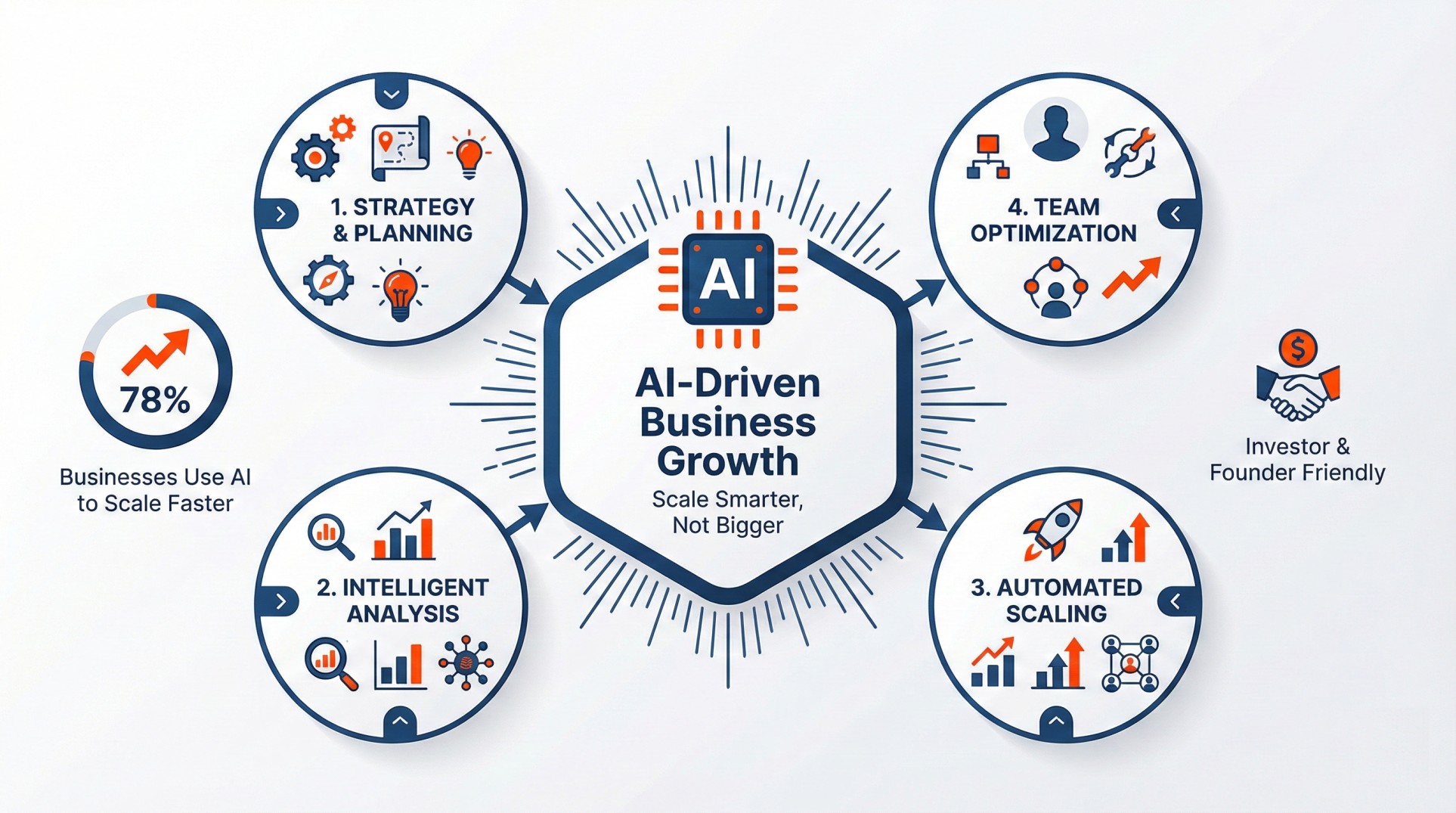
Scaling a startup isn't always doomed by a lack of talent - it's more often that founders rush into hiring staff too quickly. By 2025, savvy startups have begun using AI tools to take care of research, marketing, support, and ops before bringing on more team members. This lets founders shave off costs, accelerate their execution and get their product in front of a real audience sooner. This guide is here to help you map out the key AI tools you need to consider before bloating your staff & - ensuring that growth happens because you're being smart, not just throwing cash at the problem.
In 2025, building a startup is no longer a matter of just adding more people to the payroll. Hiring is a costly, slow and often a gamble - especially when you're still finding your feet in those early days. Many startups struggle not because they had a rubbish idea but because they were so busy building teams that they never took the time to actually prove that their entrepreneur business model was sound
across Europe , founders are taking a more intelligent approach. They're using AI tools to sort out the day to day tasks of research , marketing & customer support - instead of hiring people to do the same job. a look at the insights from web summit in 2025 shows that startups who jumped on the AI bandwagon got to product-market fit in 2-3 times the time it took those who were still doing things the old way .And this shift has not gone unnoticed by investors - funding questions are now all about how effectively you are using ai to drive real Business growth.
The idea is pretty simple but it's got oomph. Use AI to run some tests on your ideas, whack some costs out of the way and get a bit more efficient before you start signing on for long term staff This lets you free up some mental space to focus on the bigger picture strategy , make better decisions & scale with confidence. In a market where the margins are tight and competition is rife - the startups who are getting AI nailed are the ones growing leaner , smarter and in a much more sustainable fashion
For many startups, the biggest risk isn't a lack of cash - it's building something that customers just won't touch. Old-fashioned market research takes forever, costs an arm and a leg, and requires people that a lot of early-stage entrepreneurs just can't afford. But that's where the magic of AI is coming in to change all that for modern entrepreneurs and their business decisions.
These days, founders are turning to AI to do the legwork they used to need a whole research team for - and to get results a heck of a lot faster. AI can look at customer behaviour, check up on what their competitors are up to, scan the market trends and summarise all the key points in a few minutes flat. Which lets startups get their ideas out there, test them early, and adjust their business plans before they've wasted too much time on assumptions. When it comes to long term business growth, getting clarity on things fast is pretty much a no-brainer.
AI is also being used a lot more to do some serious demand forecasting. Before launching a new feature or expanding a product, founders can use AI to get a good idea of what level of demand there is, how customers will react to price changes and whether they'll even be interested in the first place. This makes all the difference in avoiding some of the big risks of major development and helps them build a business strategy that makes real sense.
Investors and mentors are now expecting a lot more from founders than just a hunch - they want to see some solid evidence to back up their decisions.
Startups now get validation in a fraction of the time, spend a lot less on research and end up building products that actually support sustainable business growth - all well before they need to start hiring and scaling up
Marketing - one area where startups often feel the pinch to hire people ASAP. Before they can prove their idea is working, they're already looking at big costs to bring in content writers, performance marketers, designers and all the rest - and that's before we even get to email specialists.
In 2025 a lot of founders are finding ways to avoid that by using AI tools to help with marketing and getting customers on board right from the start.
AI is huge here - because it lets startups create a load of consistent content for their blogs, ads & social media sites - without having to go out and build a full marketing team. Which is just perfect for founders who are more focused on getting their business growing, but are working with the financial hand they've been dealt. Instead of going out and hiring loads of people to help them get started, these AI tools let you draft your content, try out different messaging and fine tune your campaigns in a fraction of the time - and all for a fraction of the cost.
Another thing that really helps is that AI lets startups send targeted messages to the right people. So if you've got a customer or prospect that's shown interest in one of your products - or if they've got a certain level of engagement history, for instance, you can tailor your message to that just right. This can really make a difference in your conversion rates - all without having to add to your workload.
For startups that are just starting to explore the world of funding and fundraising, showing that you can get customers coming to you on the cheap, is often seen in a much better light than having a big, pricey marketing team.
AI powered email and campaign automation is a big part of this too. With behaviour based emails, retargeting flows and follow ups, you can get on with business - and forget about all the daily email nonsense. This keeps your customer acquisition costs down - and lets you scale up your business fast, without having to add loads more staff.
As long as you're not drowning in marketing work, you can grow your visibility, generate leads and get real traction. Which means your founder can then get on with the fun stuff - Business strategy development, and long term business goals - rather than just the day to day marketing drudgery.
Building a product fast is one of the biggest challenges that early-stage startups face.Limited funds and small teams can really hold up development and internal stuff - it's not just about having enough money, it's about having enough people to get everything done. By 2025, many founders are turning to AI to really speed up product development, testing and improvement - without having to hire a whole bunch of extra people.
AI tools now cover the whole product development process from that initial brainstorming session to launch. They let founders focus on the important stuff - delivering value to customers, and driving real business growth.
AI-powered development tools help make it so that founders and small teams can write, review and just generally improve code at a much higher speed. That cuts down on development time and lets startups get their MVPs out the door way faster - they can start testing features way earlier, and just generally be more agile when it comes to customer feedback. And for the startups that are prepping for funding - being able to launch an MVP fast is essentially a proof of concept.
Lots of internal tasks that used to fall on operations teams can now be automated with no-code and low-code AI platforms. Startups are using these tools to manage workflows, get their data in sync, send out notifications and report on performance - all without having to hire extra staff. That really helps them keep things lean and mean, and supports some seriously strong business growth strategies.
AI is able to connect up all the different tools and systems that a startup uses - that means less of the same old repetitive work and fewer manual handovers. Automated workflows also help the product, marketing and support teams work together way better. Founders get a much clearer view of whats going on in the business, which makes it a lot easier to develop business strategy and make decisions on a day-to-day basis.
Rather than bringing on developers, ops teams or analysts too soon, many startups use AI to help fill the gap in the short-term. This approach lets them keep their burn rate low, work more efficiently and give their founders some much-needed time to test out their ideas before deciding to scale the team or go back for more cash.
As startups grow, customer questions, leads, and support requests increase quickly. Hiring sales and support teams too early can put pressure on Funding and slow down Business growth. This is why many founders now rely on AI to manage customer interactions before expanding staff.
AI tools help startups deliver fast, consistent, and professional customer experiences—without increasing headcount. This approach is especially valuable for entrepreneur business models that need to stay lean while preparing for Startup funding or long-term scaling.
As a startup grows, the decisions about where to spend money, what to prioritise and how to make the most of your resources get a whole lot more complicated. Many founders still go with their gut, but in 2025 that often ends up being a recipe for inefficiency and wasted cash. Nowadays - thanks to AI-powered dashboards - founders can see exactly how their business is performing in real-time, making it way easier to make decisions with confidence.
AI plays a big role here too in terms of how you allocate your resources and manage your cash burn. By looking at your expenses, revenue patterns and forecasts, AI tools can help you figure out where to invest and where to pull back. This is especially important if you're planning to go out and raise some more cash - your investors are going to want to see some solid financial planning in place.
Instead of just winging it, AI provides all the predictive insights you need to make smart decisions, like having a virtual analyst or manager on side. These tools spot potential problems before they become major issues, help you pick up on trends early on and give you a clear idea of what on earth you should do. The result is a much leaner operation where you can make confident, data driven decisions that support your long-term plans - without having to bring on any more staff.
Without scalability, AI models stagnate and lose accuracy over time.
Startups use Generative AI for content creation, customer support, market research, product ideas, and workflow automation—often before hiring teams.
AI reduces costs by automating repetitive tasks, improving efficiency, and lowering the need for early hiring. This helps businesses use their Funding more effectively.
Yes. By reducing waste, improving decision-making, and supporting smarter scaling, AI helps businesses grow profitably without putting pressure on Funding business needs.
Most AI tools are affordable and scalable. Small businesses use them to control expenses while building sustainable Business strategy development plans.
Come 2025, the top-performing startups are not the ones hiring as fast as they can, but the ones that are scaling up in a smart way. Using AI early on lets you avoid all sorts of costly mistakes, keep your costs down and build a solid foundation for long-term growth - which is especially useful when cash is tight or you're getting ready to go out and talk to investors.
Key takeaways:
The smartest thing your startup can do in 2025 is not hire another employee - it's hire AI.
For expert funding, business mentorship, business growth solutions, and entrepreneur programs, visit: The Entrepreneur Studio
Follow Us:
Facebook – https://www.facebook.com/people/The-Entrepreneur-Studio/61552810916102/
Instagram – https://www.instagram.com/theentrepreneurstudio/
Twitter – https://x.com/T_E_Studio
LinkedIn – https://www.linkedin.com/company/the-entrepreneur-studio/, Manmeet Abroll, Andrew Evans